

Views: 0 Author: Site Editor Publish Time: 2025-12-11 Origin: Site
When upgrading your kitchen, the faucet might seem like a simple choice. However, the type of faucet you install can significantly impact the quality of your water, your health, and even your daily convenience. You've probably heard of a pure water kitchen faucet, but how does it stack up against a regular one?
This guide will compare pure water faucets and regular faucets, exploring their functions, benefits, and key differences. By the end, you'll have a clear understanding of which option is the right fit for your home, ensuring you get clean, great-tasting water right from your tap.
A regular kitchen faucet is the standard fixture you’ll find in most kitchens. Its primary job is to deliver hot and cold tap water for daily tasks like washing dishes, cleaning produce, and filling pots. These faucets connect directly to your home's main water supply lines. While they are reliable for general use, they don't have any built-in filtration systems. This means the water they dispense contains all the minerals, chemicals like chlorine, and potential contaminants that are present in your municipal water supply.
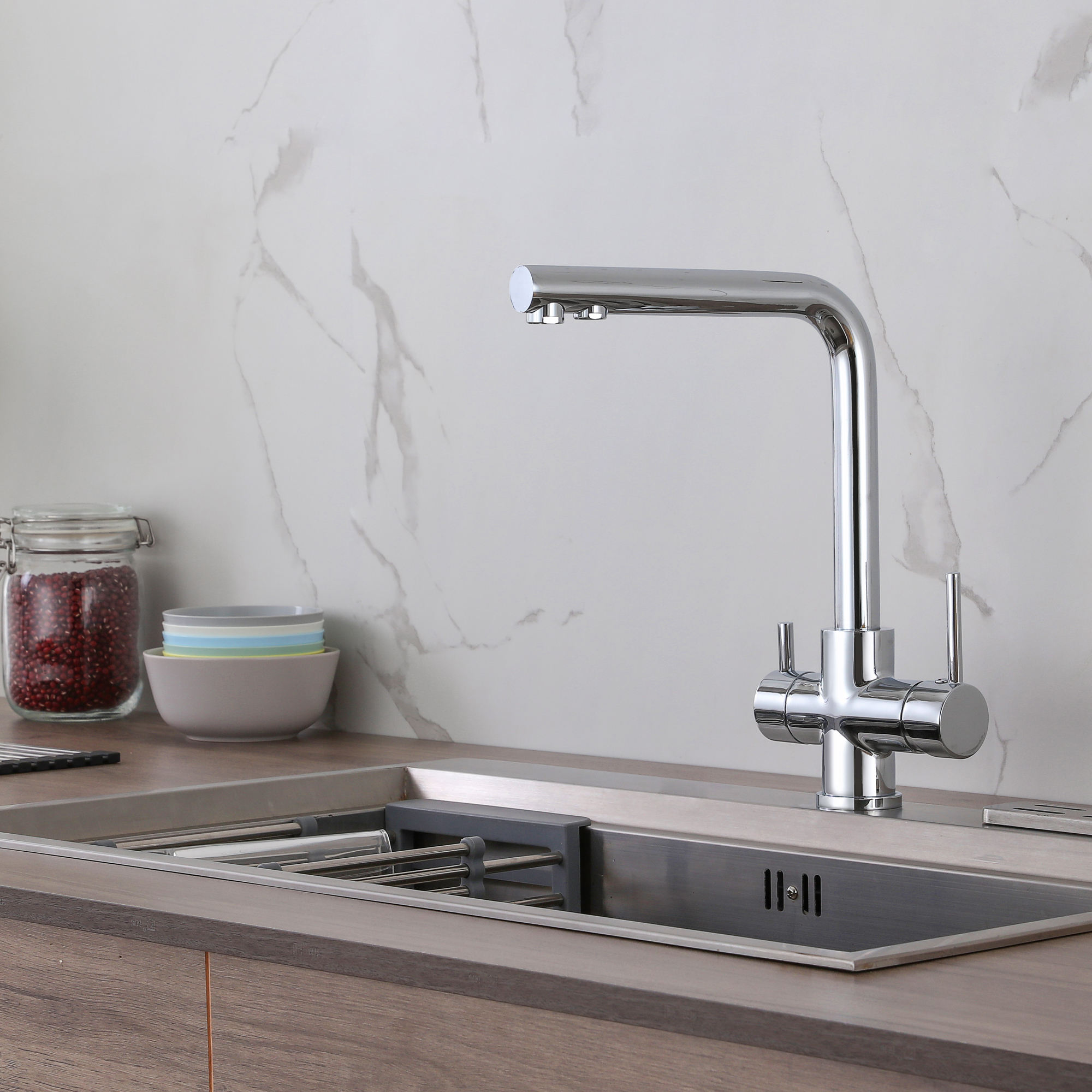
A pure water kitchen faucet is a more advanced fixture designed to provide filtered, purified drinking water in addition to regular hot and cold tap water. These are often called "3-way" or "tri-flow" faucets because they have separate internal channels and dedicated levers or controls for three water flows: hot, cold, and purified.
The purified water is delivered through a dedicated line that connects to an under-sink water filtration system (like a reverse osmosis system). This setup ensures that the filtered water never mixes with unfiltered tap water, providing clean, safe water for drinking and cooking.
While both faucets deliver water, their functionality and benefits differ significantly. Let's break down the key distinctions.
A regular faucet typically has one or two handles to control the flow and temperature of unfiltered tap water from a single spout.
A pure water kitchen faucet integrates two systems into one sleek design. It usually features two separate handles: one for mixing hot and cold tap water and another dedicated to dispensing filtered water. This dual-function design eliminates the need for a separate, smaller faucet for drinking water, saving counter space and providing a more streamlined look.
| Feature | Regular Faucet | Pure Water Kitchen Faucet |
| Water Outputs | Hot and cold tap water | Hot tap water, cold tap water, and filtered water |
| Internal Channels | One channel for mixed water | Separate channels for tap and filtered water |
| Controls | 1-2 handles for tap water | Separate handles for tap water and filtered water |
| Filtration | None | Connects to an under-sink filtration system |
This is the most significant difference. Regular faucets dispense water directly from the municipal supply, which can contain chlorine, sediment, heavy metals, and other impurities that affect its taste and odor.
A pure water kitchen faucet works with a filtration system to remove these contaminants. The result is water that is not only safer to drink but also tastes and smells better. This is especially beneficial for preparing food and beverages like coffee and tea, where water quality can dramatically alter the final flavor.
By removing potentially harmful substances, a pure water kitchen faucet provides an extra layer of safety for your family. Filtration systems can reduce levels of lead, pesticides, bacteria, and viruses that might be present in tap water. For households with young children, elderly members, or individuals with compromised immune systems, having access to purified water on demand is a major advantage. Regular faucets simply can't offer this level of health protection.
Regular faucets are generally less expensive upfront and have a straightforward installation process that connects directly to the hot and cold water lines.
A pure water kitchen faucet represents a larger initial investment. The faucet itself is more complex, and you also need to purchase and install a separate water filtration system. While the total cost is higher, many homeowners find the long-term benefits—such as better health, improved taste, and no longer needing to buy bottled water—justify the expense.
| Aspect | Regular Faucet | Pure Water Kitchen Faucet |
| Upfront Cost | Lower | Higher (includes faucet + filtration system) |
| Installation | Simpler; connects to two water lines | More complex; connects to three lines |
| Long-Term Savings | None | Reduces or eliminates the need for bottled water |
Choosing between a regular and a pure water kitchen faucet depends on your priorities and budget.
Choose a regular kitchen faucet if:
You are satisfied with the taste and quality of your local tap water.
Your budget for a kitchen upgrade is limited.
You prefer a simpler installation process.
You already have a separate water filter (like a pitcher or countertop unit) that you're happy with.
Choose a pure water kitchen faucet if:
You are concerned about the quality and taste of your tap water.
You want convenient, on-demand access to purified water for drinking and cooking.
You want to reduce your reliance on bottled water and minimize plastic waste.
You prefer a sleek, integrated look and want to save counter space by avoiding a separate filter tap.
Upgrading your kitchen faucet is an opportunity to improve both the style of your space and the quality of your daily life. While a regular faucet is a functional, budget-friendly choice, a pure water kitchen faucet offers superior convenience, better-tasting water, and significant health benefits. By integrating filtration directly into the main tap, you get a seamless, all-in-one solution that provides peace of mind with every glass you pour.
Ready to explore high-quality faucet options? GOWO offers a range of durable and stylish kitchen faucets, including two-handle designs perfect for any modern kitchen. Browse our collection to find the ideal fixture that combines form and function for your home.


